
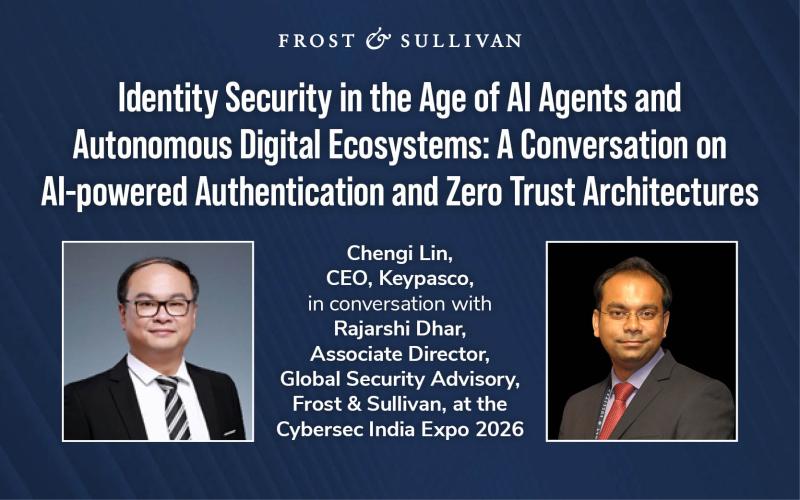
A banking task can turn into a series of password resets and repeated checks. Frost & Sullivan’s Rajarshi Dhar shared this observation alongside his interview with our CEO, Chengi Lin. Here are three ideas from that conversation.
Reduce friction with context
We discussed how device information, user behavior and environmental context can help assess the risk of an interaction. Passwordless and adaptive authentication aim to make verification fit the situation while reducing the burden of repeated password management.
Build trust across each interaction
Identity, devices and risk need to be considered together. In the interview, we explored device verification, behavioral analysis and our two-channel architecture as parts of an approach that connects authentication with service delivery.
Extend identity security to AI agents
As AI agents access systems and interact with services independently, organizations need to assess machine identities and trust as well. We discussed this emerging direction and the importance of designing verification and risk management into digital services.
We want security and convenience to progress together. For the full discussion, including India and partner ecosystems, read the original Frost & Sullivan interview and watch the video available there. This article summarizes the conversation.