
Multi-factor authentication (MFA) has long served as an effective defense against account takeovers and credential theft — an indispensable first line of identity verification. Yet the rise of AI Agents and Deepfake technology is raising the bar: confirming that the right person logged in is just the beginning. Ensuring that every subsequent action is equally trustworthy is the next critical challenge.
When AI Starts ‘Doing Things’, Can Verification Keep Up?
OpenClaw (nicknamed “Lobster”) is an AI Agent platform that went viral in early 2026, designed to let users issue commands in natural language while AI autonomously completes complex tasks across local and cloud environments. By integrating APIs from multiple model providers and cloud vendors, its intuitive interface and strong extensibility drove rapid adoption among developers and enterprise users worldwide, even boosting revenue for the cloud and model companies behind it. Yet it is precisely this “authorize once, delegate indefinitely” model that has introduced a serious vulnerability on the security front.
Once granted user authorization, this type of AI assistant can autonomously execute tasks in the background: accessing cloud data, calling system APIs, sending emails, transferring files. None of these actions require re-authentication or trigger any verification mechanism. As OpenClaw went viral globally, security alarms followed: the “ClawJacked” vulnerability allows malicious websites to hijack local AI agents via WebSocket, gaining complete control of the system.
When an AI assistant begins executing sensitive operations the user never intended, how would the system know? Ensuring that the one issuing commands is always the legitimate user is an urgent unsolved problem for the industry and the next major battleground for cybersecurity.
References:
- Cnyes 〈OpenClaw: Enriching Model Companies and Cloud Vendors〉 (2026.03) https://news.cnyes.com/news/id/6369414
- Cool3c 〈OpenClaw Windows Installation Guide Part 2〉 (2026.04) https://www.cool3c.com/article/247416
Deepfakes Make Faces and Voices Untrustworthy
Threats don’t only come from within.
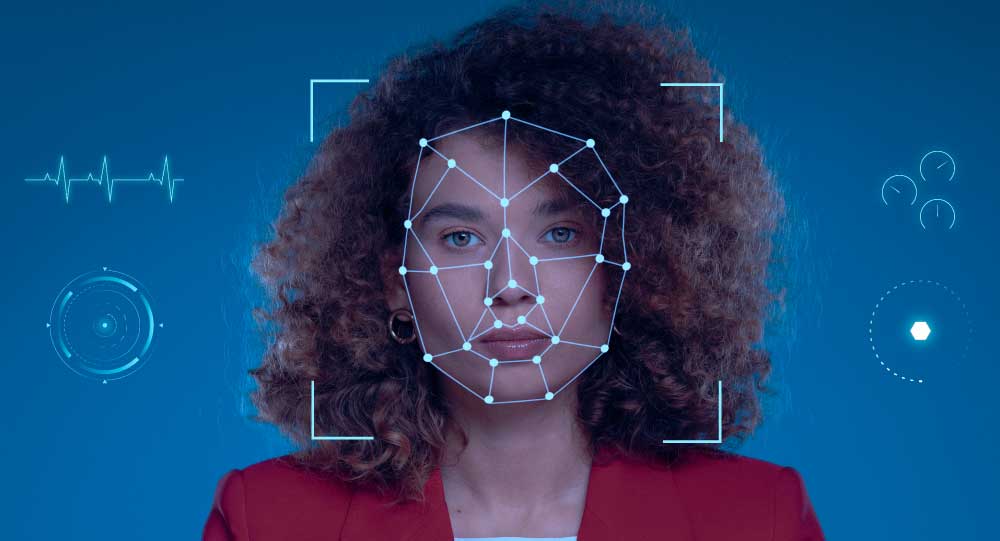
The rapid spread of generative AI has dramatically lowered the barrier to creating convincing fake audio and video, work that once required specialized equipment and extensive source material. Deepfake technology now needs as little as 20 seconds of audio or a single photograph to produce highly realistic voice and facial replicas. The raw material is rarely hard to find: it’s already out there on social media profiles, corporate websites, and recorded video calls.
The authentication factors enterprises once considered hardest to forge: your face, your voice are no longer an impenetrable line of defense against generative AI. Attackers can synthesize a target’s likeness in real time, impersonate senior executives over video calls to issue fraudulent instructions, or bypass voice and facial recognition systems to pass identity checks, all while the recipient has virtually no way to tell the difference.
This is no longer a theoretical risk. In the first half of 2025, losses from Deepfake fraud reached $410 million. At one engineering firm in Hong Kong, an AI-generated likeness of the CFO was used to manipulate an employee into executing a cross-border wire transfer during a video call ,a single incident resulting in a $25.5 million loss. Similar tactics continue to replicate across industries worldwide, with victims spanning finance, manufacturing, and legal sectors.
Single-factor biometric verification is no longer enough.
References:
- Brightside AI 〈How to Defend Against Deepfake Attacks: 2025 Guide〉 (2025.10) https://www.brside.com/blog/how-to-defend-against-deepfake-attacks-2025-guide
- Adaptive Security 〈Modern Deepfakes〉 (2025.10) https://www.adaptivesecurity.com/blog/deepfakes
From ‘Single-Point Verification’ to ‘Continuous Verification’: Keypasco’s Approach
Facing these two challenges, Keypasco’s core response is clear: verification cannot happen just once, it must run throughout every operation.
Keypasco’s MFA technology establishes a multi-dimensional, simultaneous verification barrier that is extremely difficult to forge:
Hardware Layer
Which device is the operation coming from? Hardware identifiers such as CPU and hard drive IDs are checked against authorized devices to ensure no action originates from an unknown machine.
Geolocation Layer
Is the location of the operation unusual? If the same account suddenly switches from Taipei to an overseas IP, an interception mechanism is triggered immediately.
Behavioral Pattern Layer
Does the operation match the user’s historical behavior? Bulk downloading of confidential files in the middle of the night should be flagged as anomalous even if authentication has passed.
This three-dimensional combination not only protects “the moment of login”, it continuously verifies, even as AI assistants execute background operations: “Is the one giving commands right now truly the authorized user?”
Redefining the Last Mile of Cybersecurity
Attackers are already using AI. Defenders must evolve as well.
MFA isn’t going away, but how it works must change, upgrading from static one-time confirmation to dynamic continuous monitoring. This is not just a technical adjustment; it’s a fundamental shift in how we think about identity verification.
With over a decade of expertise in identity verification, from Taiwan’s financial banking systems to enterprise systems abroad. Keypasco continues to evolve its solutions to meet the new demands that the AI era places on verification mechanisms.
Explore Our Solutions :
Keypasco Platform |Enterprise |ZTA